
Pressure Reducing Valve and Shower Valve Replacement in Krugerville
2 de noviembre de 2026 · HVAC & Plumbing
Los artículos del blog todavía no están traducidos al español. Mientras tanto, se los mostramos en inglés.
The Job: A PRV and a Shower Valve in Krugerville
We were recently called out to a home in Krugerville for a plumbing diagnosis and repair. The plan for the visit was straightforward: replace the pressure reducing valve outside the house and replace the mixing valve for the shower.
These two parts don't always come up together, but they make a good pair to talk about. One controls the pressure of all the water coming into the house. The other controls the mix of hot and cold water at the shower. Both are parts most homeowners never think about until something goes wrong.
What We Did
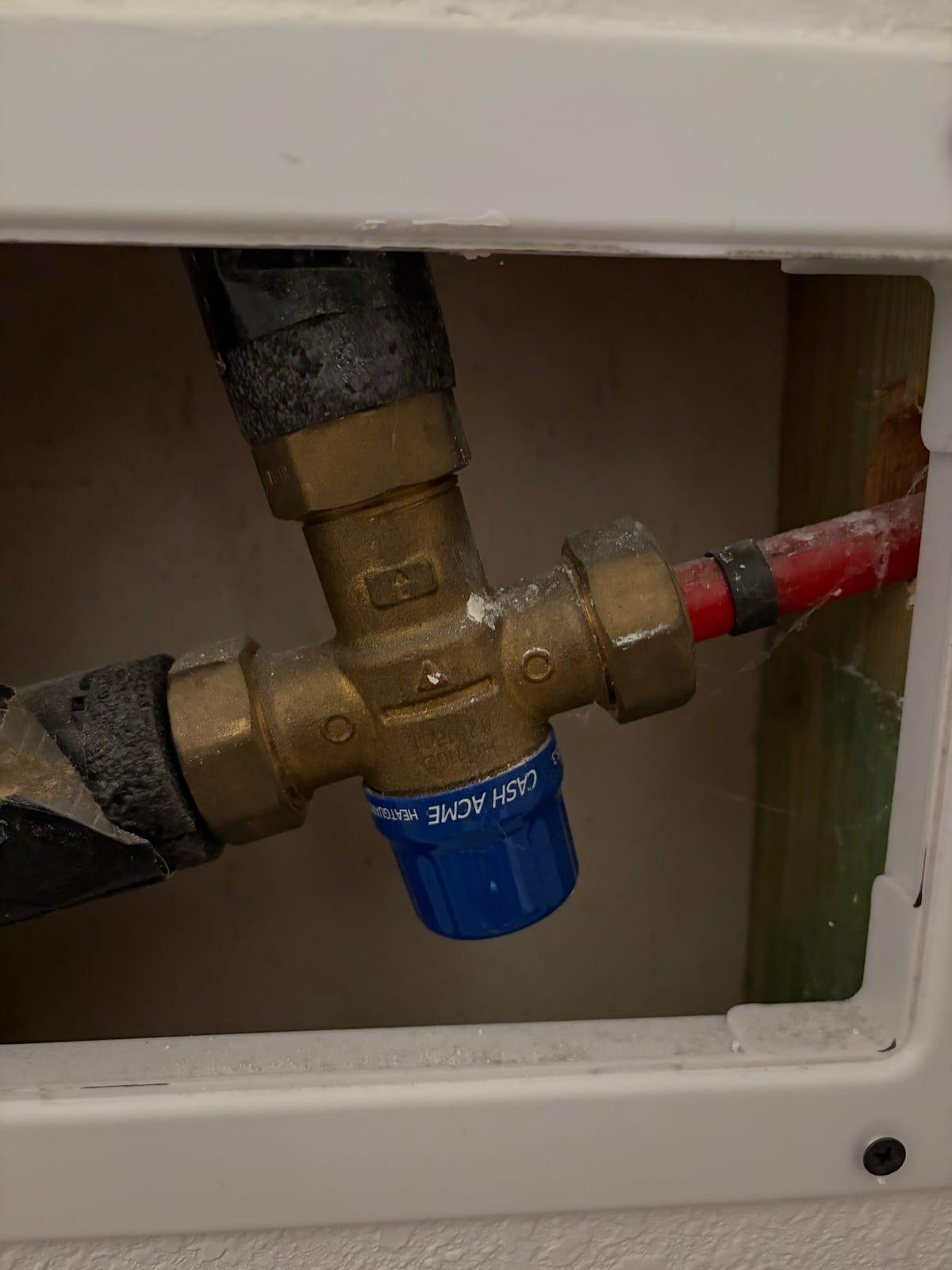
Our plumber replaced the pressure reducing valve on the water line outside the house. That valve is the first thing city water passes through on its way inside, so swapping it means shutting off the water, cutting out the old valve, and installing the new one in its place on the main line.
Inside, we installed a new mixing valve for the shower. The mixing valve is the part behind the handle that blends hot and cold water to the temperature you pick. Replacing it gives the shower a fresh valve to control water flow and temperature.
With both parts in, the work on the job ticket was complete.
What a Pressure Reducing Valve Actually Does
Water utilities often push water through their mains at fairly high pressure so it can reach every home, hydrant and water tower in the system. That's good for the city, but it can be more than household plumbing wants to see. In some areas, street pressure runs well above what's considered comfortable for a home.
A PRV is a spring-loaded valve that takes that higher incoming pressure and lowers it to a steadier, more moderate level before the water reaches your pipes. Many plumbers aim for somewhere in the 40 to 60 psi range for a typical home, and plumbing codes commonly call for a PRV when street pressure is above 80 psi.
Here's what keeping pressure in check helps protect:
- Supply lines and connectors under sinks and toilets, which can be stressed by constant high pressure
- Faucets and shower valves, whose internal seals and cartridges can wear faster
- Toilet fill valves, which may run or hiss when pressure is too high
- Water heaters, dishwashers, washing machines and ice makers, which all have valves rated for certain pressures
- Pipe joints and fittings throughout the house
PRVs don't last forever. The internal spring, diaphragm and seals wear over time, and a worn valve may stop holding pressure where it should. That's why replacing an aging PRV is a normal part of keeping a home's plumbing healthy.
Signs Your Water Pressure May Be Too High
High water pressure doesn't always announce itself. Some homeowners actually like the strong shower and don't realize it's a warning sign. Here are some common clues that your PRV may be wearing out or pressure is running high:
- Banging or knocking pipes when a faucet or appliance shuts off (often called water hammer)
- Faucets that drip even after you replace washers or cartridges
- A toilet that runs on its own or refills randomly
- Water spraying hard or splashing out of the sink
- Pressure that seems to swing between strong and weak
- Leaks at supply lines, washing machine hoses or the water heater relief valve
- Fixtures or appliance valves that seem to wear out sooner than expected
One sign alone doesn't prove the PRV is bad, but several of them together are worth a closer look.
A Simple Check You Can Do Yourself
You can get a decent idea of your home's water pressure with an inexpensive pressure gauge from a hardware store. It screws onto an outdoor hose bib like a garden hose.
To get a good reading, make sure no water is running inside the house: no showers, no dishwasher, no irrigation, no toilets refilling. Then turn the hose bib on fully and read the gauge. If you can, check it at a few different times of day, since city pressure can change, especially overnight.
A few things to keep in mind:
- A reading that stays roughly between 40 and 60 psi is generally fine for most homes
- Readings above 80 psi are worth having a plumber look at
- If the needle creeps upward when no water is being used, that can point to a worn PRV or a thermal expansion issue
- Don't try to adjust or take apart a PRV yourself unless you know what you're doing; it's on your main water line
One more note: a working PRV can create what's called a closed system, meaning heated water from your water heater has nowhere to expand back to the street. Many homes use a thermal expansion tank near the water heater to handle that. If you have a PRV and no expansion tank, it's a good question to ask your plumber.
Why Shower Mixing Valves Wear Out
The mixing valve in your shower works every single time someone takes a shower. Inside is a cartridge or set of parts with seals that blend hot and cold water. Over the years, those parts deal with constant movement, hot water, and minerals from our North Texas water.
When a shower valve is wearing out, you might notice the handle getting stiff, the temperature being hard to set, sudden swings to hot or cold when someone flushes a toilet, or a drip from the showerhead after it's shut off. Sometimes a cartridge replacement does the trick. Other times, replacing the whole valve makes more sense, especially if parts are hard to find or the valve body itself is worn.
Many newer shower valves are pressure-balancing or thermostatic, which helps keep water temperature steady when pressure changes elsewhere in the house. That's a nice safety upgrade, particularly against sudden blasts of hot water.
What Affects the Cost of These Repairs
Every home is a little different, so the price of a PRV or shower valve replacement can vary. Here are the main things that come into play:
- Where the PRV is located and how easy it is to reach, including whether dirt has to be dug away to get to it
- The size and type of the main water line
- The type of shower valve chosen and how it fits the existing trim and plumbing
- Whether the shower wall needs to be opened up for access
- Any added parts, like shutoff valves or an expansion tank, if needed
We'll always walk you through the options and the price before any work starts, so there are no surprises. If you'd rather stay ahead of problems like these, our Captain's Club membership includes regular checkups that can catch wear early.
When to Call a Plumber
If your pressure gauge reads high, your pipes bang, fixtures keep dripping, or you've found water where it shouldn't be, it's time to have a pro take a look. A worn PRV is a quiet problem that can lead to louder ones, like leaks inside walls. If you suspect a hidden leak, our leak detection service can help track it down.
Sailor's Air & Plumbing serves Krugerville, Aubrey, Pilot Point, Denton, Frisco, Prosper and nearby towns. Give us a call at (940) 290-3800 and we'll check your water pressure, your PRV and your fixtures, and tell you straight what needs attention and what doesn't.
¿Quiere que un profesional lo revise?
Reserve en línea en más o menos un minuto, o llame y platíquelo con alguien de aquí.